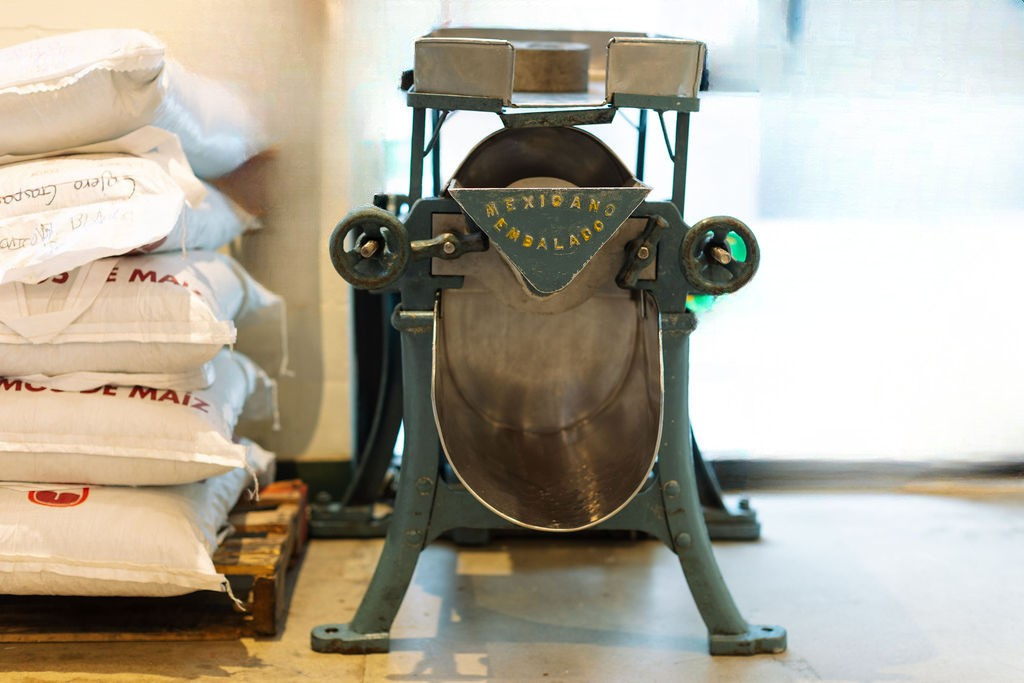
Vintage Mexican tortilla maker machine with bags of cornmeal on a wooden pallet to the left side.
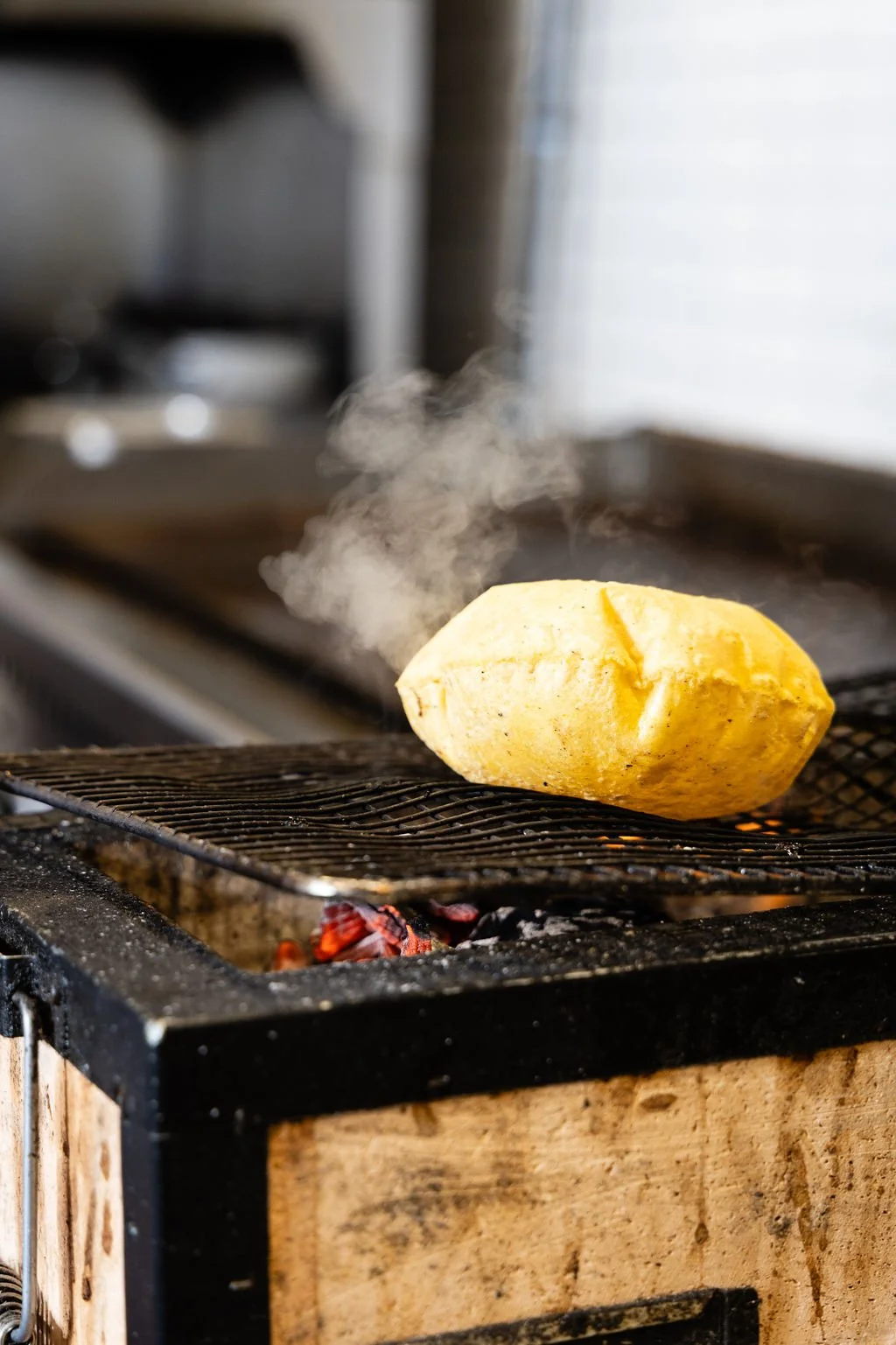
A yellow, steaming baking sweet potato on a grill rack over hot coals in a wood-fired oven.
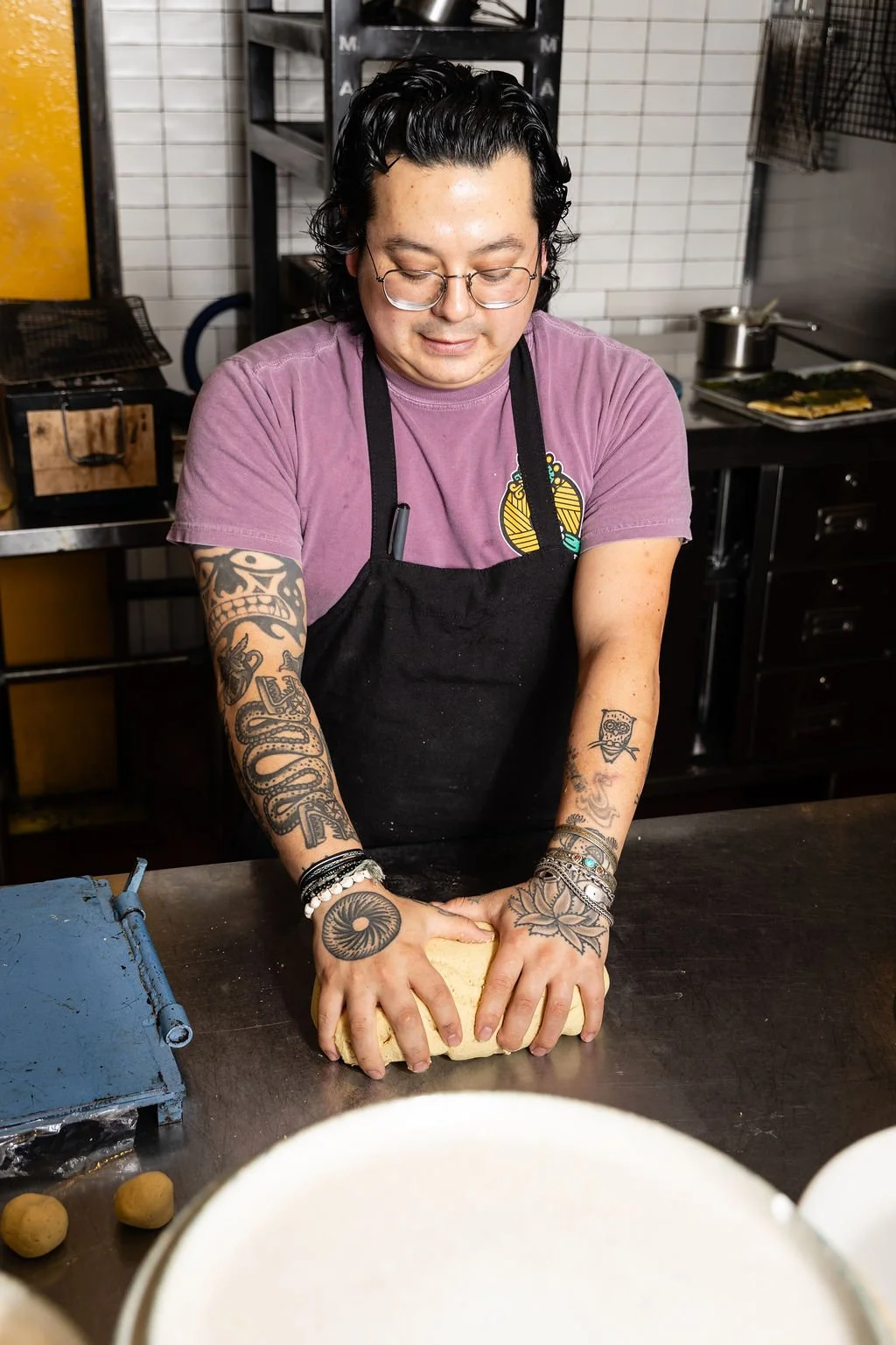
A person with shoulder-length black hair, glasses, and tattoos rolling out dough on a kitchen counter.
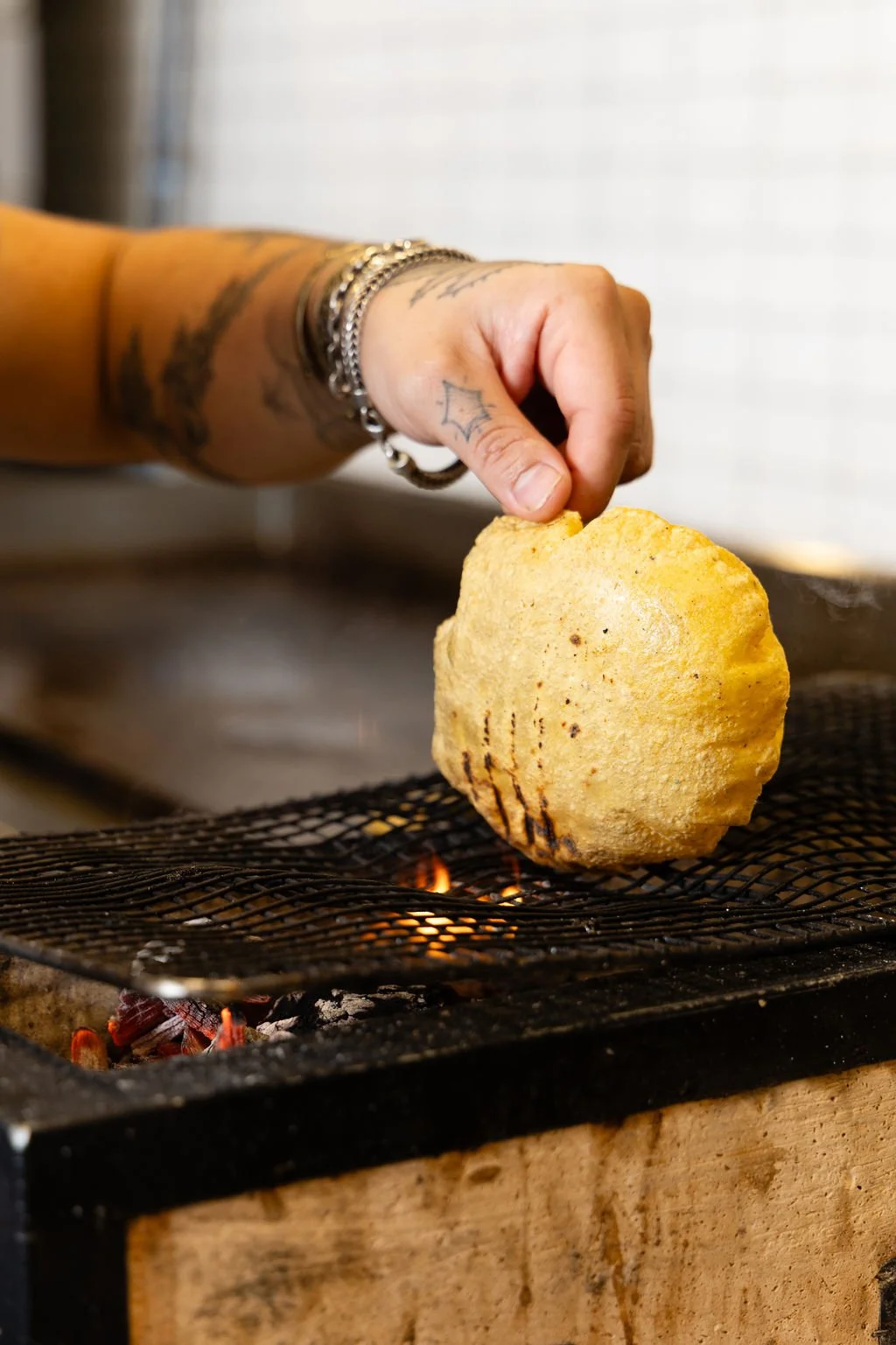
A person with tattoos and jewelry is holding a large piece of fried food, likely a churro, over an open flame on a grill.
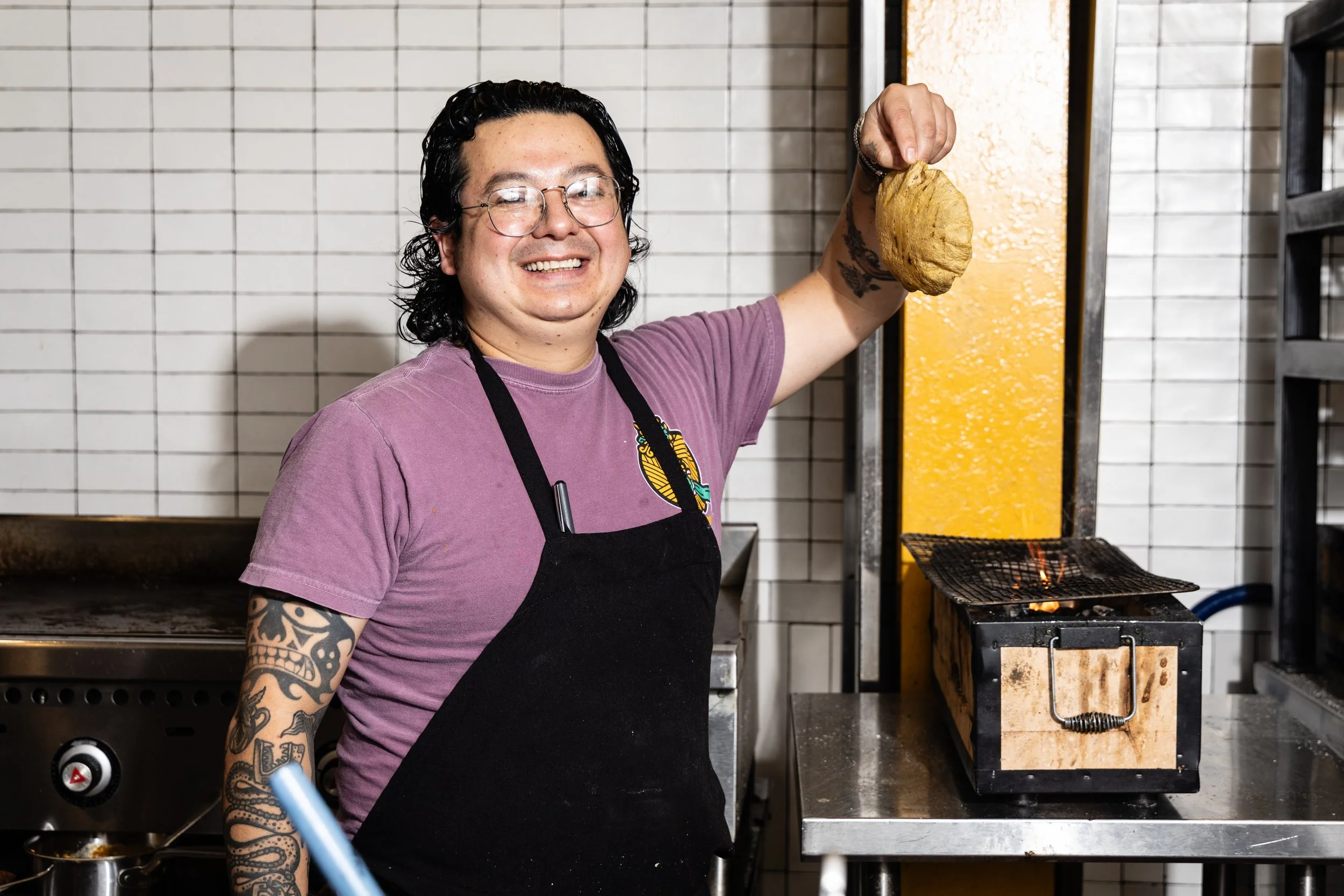
A man with black hair, glasses, and tattoos on his arms, wearing a purple shirt and a black apron, smiling while holding a piece of food in a kitchen with tiled walls and cooking equipment.
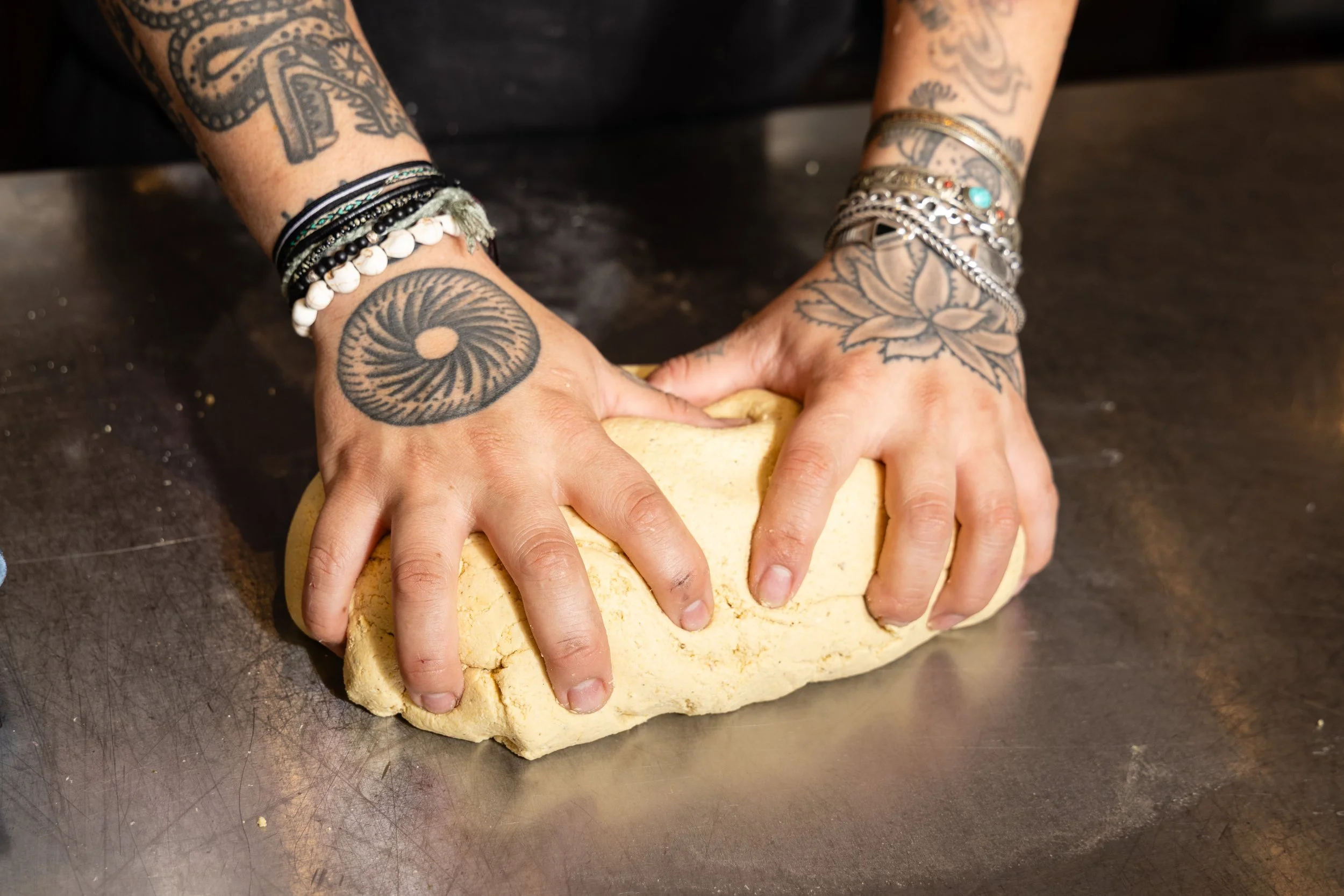
Person kneading dough on a dark wooden surface, wearing multiple silver, gold, and beaded bracelets with tattoos on their arms.

It all started with the search for the perfect corn tortilla…

Chef Julio Hernandez spent years obsessing over the craft — researching, practicing, tweaking, repeating. When the world shut down during the COVID-19 pandemic, he bet on himself in a big way: emptying his savings to buy a five-horsepower, 600-pound molino and importing 3,000 pounds of heirloom corn straight from Mexico.

This isn’t the industrialized corn you’ll find dominating most U.S. grocery shelves. Heirloom corn is old-school in the best way — organic seeds carefully preserved and passed down through generations, carrying deeper flavor, richer texture, and serious cultural roots.

For Chef Julio, it isn’t just about making tortillas. It was about bringing tradition back to life, one batch of masa at a time.

And trust us — you can taste the difference.
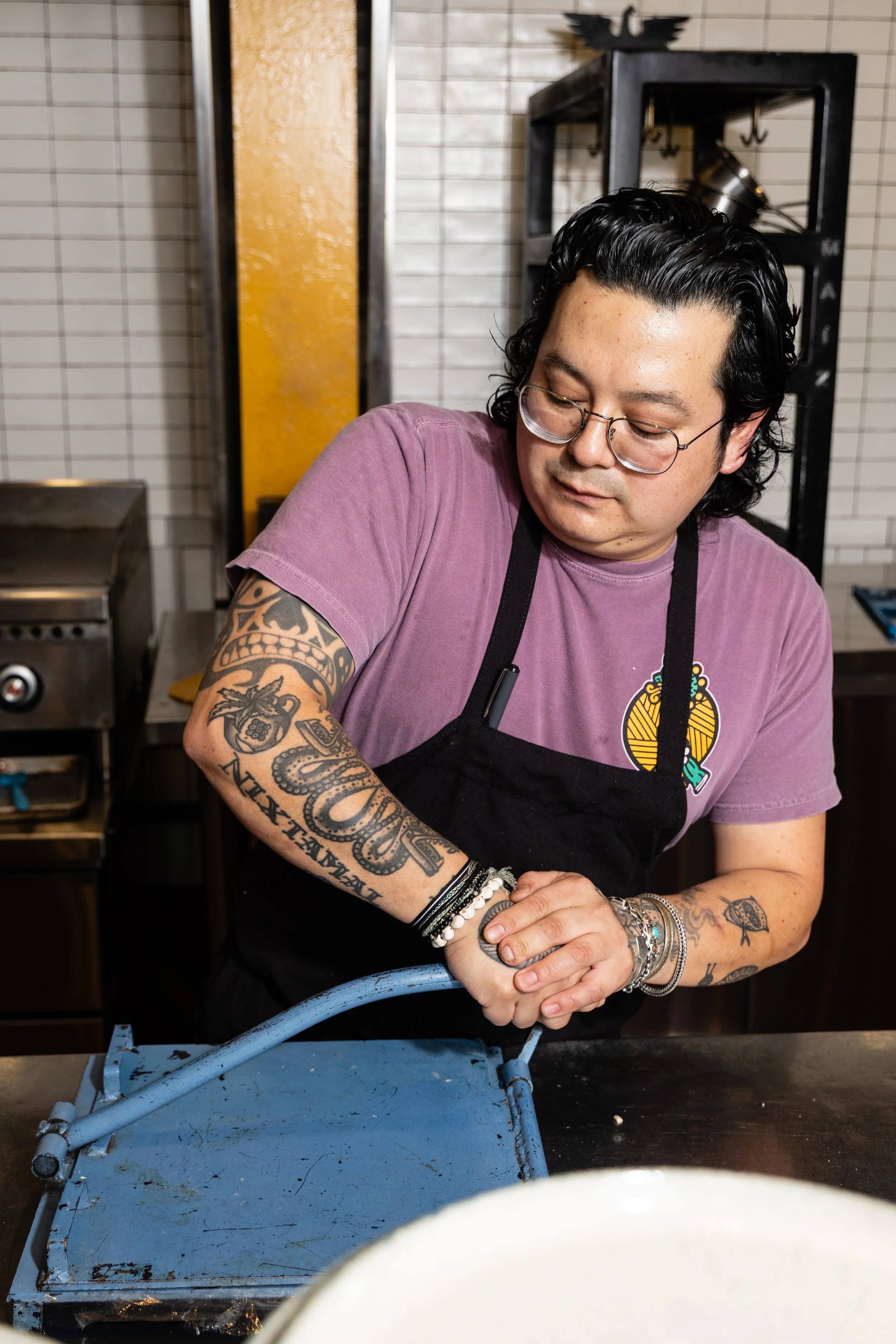
A man with glasses, black wavy hair, and tattoos on his arms is working in a kitchen, wearing a purple shirt and a black apron, leaning over a blue cart, with a tiled wall and kitchen equipment in the background.
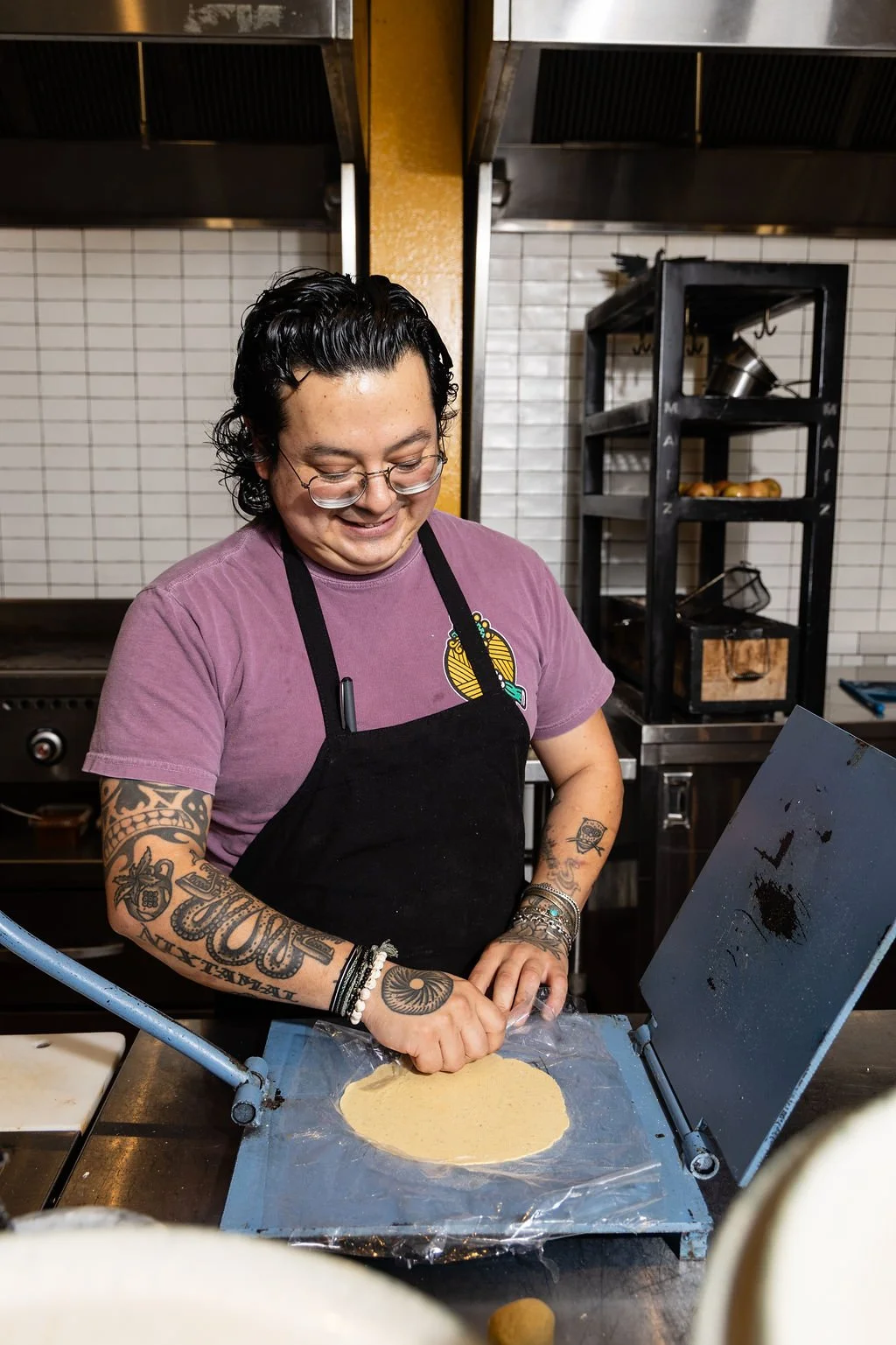
A woman with tattoos on her arms, wearing glasses, a purple shirt, and a black apron, is smiling and making dough on a pasta machine in a professional kitchen.